The shelf

What I actually studied.

The continuing education happened outside a classroom. These are the books that left a mark, and that I still hand to clients when the problem they are describing has already been written about properly. Hover a cover for the short version, or open the full summary under any title.

  • Pigheaded discipline on twelve things, rather than scattered effort across a hundred. The Ultimate Sales Machine Chet Holmes Pigheaded discipline on twelve things, rather than scattered effort across a hundred.
    Full summary

    Holmes argues that businesses fail from scattered effort rather than a shortage of ideas. The core of it is pigheaded discipline applied to twelve things instead of casual attention paid to a hundred. The Dream 100 approach, going after your best prospects relentlessly rather than advertising at everyone, changed how I target work. This is the book I found in a library in 2014, and it rerouted the whole career.
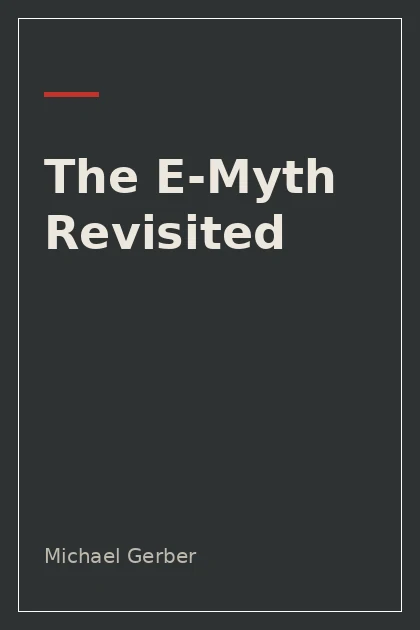

  • Names the trap exactly: working in the business instead of on it. Build it so it runs without you. The E-Myth Revisited Michael Gerber Names the trap exactly: working in the business instead of on it. Build it so it runs without you.
    Full summary

    Gerber names the trap most owners are standing in. They were a technician who got good at the work, and then bought themselves a job. The fix is to build the business as though you intend to franchise it, so the systems carry the result rather than your presence. Every engagement I run has this book somewhere underneath it.

  • How to build an offer good enough that price stops being the conversation. $100M Offers Alex Hormozi How to build an offer good enough that price stops being the conversation.
    Full summary

    Hormozi's point is that a good enough offer makes price stop being the conversation. He breaks down how to stack value, strip out risk and name the thing so it cannot be compared like for like. Useful when a client is competing on price and losing, which is almost always a packaging problem rather than a product one.

  • Strategy fails on delivery, not on ideas. The discipline of actually getting things done. Execution Larry Bossidy & Ram Charan Strategy fails on delivery, not on ideas. The discipline of actually getting things done.
    Full summary

    Bossidy and Charan argue that strategy does not fail in the planning, it fails in the delivery. The book is about the unglamorous discipline of linking people, strategy and operations so decisions actually turn into action. It is the counterweight to every exciting plan that never shipped.

  • Assets against liabilities, and the gap between earning money and owning something. Rich Dad Poor Dad Robert Kiyosaki Assets against liabilities, and the gap between earning money and owning something.
    Full summary

    Kiyosaki's lasting contribution is the distinction between an asset and a liability, and the gap between earning money and owning something that earns. The specifics are debatable and the frame is not. It is the book that got me thinking about what I was building rather than only what I was billing.

  • Definiteness of purpose and the mastermind. Old, and still the root of most of what followed. Think and Grow Rich Napoleon Hill Definiteness of purpose and the mastermind. Old, and still the root of most of what followed.
    Full summary

    Old, and still the root of most of what followed it. Definiteness of purpose, the mastermind, persistence carried past the point where it feels reasonable. Practically, this is the book that told me to save ten percent of every dollar coming in, and the first time I managed to do it was a genuine turning point.

  • Selling as service rather than persuasion, with the mechanics underneath it. Secrets of Closing the Sale Zig Ziglar Selling as service rather than persuasion, with the mechanics underneath it.
    Full summary

    Ziglar on the mechanics of the close, from an era when selling happened face to face and there was no funnel to hide behind. Hundreds of specific techniques, but the spine of it is that selling is a transfer of conviction. I had been cold selling for years before I read it, and this is what organized what I was already doing by instinct.

  • The trigger, action, reward and investment loop behind products people come back to unprompted. Hooked Nir Eyal The trigger, action, reward and investment loop behind products people come back to unprompted.
    Full summary

    Eyal's model for why some products get used daily and others get installed and forgotten. Trigger, action, variable reward, investment. Essential if you are building software, and a useful lens on your own habits once you notice the loop running on you.

  • Small changes to the daily inputs, compounding into different outputs. Millionaire Success Habits Dean Graziosi Small changes to the daily inputs, compounding into different outputs.
    Full summary

    Graziosi on the daily habits and internal stories that decide the outcome long before strategy gets a say. Lighter than most of this shelf, and better than most at the part people skip, which is noticing the beliefs quietly setting a ceiling on what you will even attempt.

  • Still the clearest book written on paying genuine attention to other people. How to Win Friends and Influence People Dale Carnegie Still the clearest book written on paying genuine attention to other people.
    Full summary

    Carnegie, still unbeaten on the fundamentals of dealing with people. Take a real interest, remember names, let the other person own the idea. Everything I learned about working a networking room and knocking on doors traces back to the principles in here.

  • Most goals fail from under-commitment rather than bad luck. Set bigger, act accordingly. The 10X Rule Grant Cardone Most goals fail from under-commitment rather than bad luck. Set bigger, act accordingly.
    Full summary

    Cardone's argument is that most people set a target a tenth the size of what they need, then apply a tenth of the effort it would take. Loud, repetitive, and correct about the specific failure it names, which is underestimating what a goal actually costs in action.

  • A reminder that the work and the journey turn out to be the same thing. The Alchemist Paulo Coelho A reminder that the work and the journey turn out to be the same thing.
    Full summary

    The outlier on this shelf. Coelho's story about a shepherd chasing a treasure is really about recognizing the thing you are meant to pursue, and the signs that confirm it. I come back to it on the hard stretches, which is most of them.

  • Compete less by building somewhere the competition is not already standing. Blue Ocean Strategy Kim & Mauborgne Compete less by building somewhere the competition is not already standing.
    Full summary

    Kim and Mauborgne on competing where there is no competition. Rather than fighting for a share of a bloody market, change what the offer is until the comparison stops making sense. It is a strategic version of the positioning work I do with clients.

  • Systems over goals, which is the same argument I end up making to business owners. Atomic Habits James Clear Systems over goals, which is the same argument I end up making to business owners.
    Full summary

    Clear's practical system for changing behavior through small compounding actions and the environment around them. The line that stuck: you do not rise to your goals, you fall to your systems. Which is the argument I make about businesses, applied to a person.

  • Validate fast and ask for money early, instead of polishing before anyone has said yes. Million Dollar Weekend Noah Kagan Validate fast and ask for money early, instead of polishing before anyone has said yes.
    Full summary

    Kagan's case for starting before you are ready, and validating real demand in forty eight hours rather than forty eight weeks. A direct antidote to building something nobody asked for, which I have done more than once.

  • Buy back the draining hours in the right order, rather than hiring at random. Buy Back Your Time Dan Martell Buy back the draining hours in the right order, rather than hiring at random.
    Full summary

    Martell on the real reason owners stay stuck. They hire to grow the business when they should be hiring to buy back the hours that are killing them. The buyback principle and the time and energy audit are the two most immediately usable tools I have ever handed a client.

  • What operating at the top actually costs, written without softening any of it. Relentless Tim Grover What operating at the top actually costs, written without softening any of it.
    Full summary

    Grover on what separates people who perform under pressure from everyone else. Uncompromising, not always comfortable, and the right book for a stretch where the deciding factor is simply whether you keep going while nothing is working.

  • Turning expertise into something people want to belong to, not just read. Expert Secrets Russell Brunson Turning expertise into something people want to belong to, not just read.
    Full summary

    Brunson on building a movement rather than a mailing list. The attractive character, the origin story, the belief shift you have to create before anyone buys anything. The part I use most is the structure for telling a story that sells without sounding like a pitch.

  • The funnel mechanics sitting underneath most of modern online selling. DotCom Secrets Russell Brunson The funnel mechanics sitting underneath most of modern online selling.
    Full summary

    The companion volume, on the mechanics. Value ladders, funnels, and traffic you own rather than rent. It gave me vocabulary for things I had been building ad hoc for years without knowing they had names.

  • Attention as the one thing you genuinely control. The Power of Now Eckhart Tolle Attention as the one thing you genuinely control.
    Full summary

    Tolle, for the part of the work that happens between the ears. The practice of being present rather than rehearsing the past or forecasting the collapse. Business reading is useless if your attention is somewhere else, and this shelf would be dishonest without it.

  • Direct response treated as a system to run, rather than a mood to be in. Sell Like Crazy Sabri Suby Direct response treated as a system to run, rather than a mood to be in.
    Full summary

    Suby's playbook for direct response that converts, built on leading with value and selling to people who have already raised a hand. Aggressive in tone, specific in structure, and the right reference when a client's lead flow is the bottleneck.

  • The six reasons people say yes, and how to notice them being used on you. Influence Robert Cialdini The six reasons people say yes, and how to notice them being used on you.
    Full summary

    Cialdini's six principles of persuasion, and the book here closest to a science text. Reciprocity, commitment, social proof, authority, liking, scarcity. Read it once to use it, then again so you notice when it is being used on you.

  • Small consistent action, run long enough, beating short bursts of intensity. The Compound Effect Darren Hardy Small consistent action, run long enough, beating short bursts of intensity.
    Full summary

    Hardy on the unglamorous truth that small consistent choices decide the outcome, and that the results show up long after the habit does. This is the frame that helped most through the years when my effort and my income did not match.

  • How Full Is Your Bucket? Tom Rath & Donald Clifton The measurable effect of positive interaction, in a metaphor you can teach a team in five minutes. How Full Is Your Bucket? Tom Rath & Donald Clifton The measurable effect of positive interaction, in a metaphor you can teach a team in five minutes.
    Full summary

    Rath and Clifton on the measurable effect of positive interaction at work. The bucket and dipper metaphor is simple enough to teach a team in five minutes, and the research underneath it is the part that convinced me. It changed how I give feedback to people I manage.

  • The One Minute Manager Ken Blanchard & Spencer Johnson Clear goals, immediate praise, immediate redirection. Short enough to read before a hard conversation. The One Minute Manager Ken Blanchard & Spencer Johnson Clear goals, immediate praise, immediate redirection. Short enough to read before a hard conversation.
    Full summary

    Blanchard and Johnson on three management habits: clear goals, immediate praise, immediate redirection. I found it after hiring had gone badly for me, and it named precisely what I had failed to do. The brevity is the point, because the whole thing can be read before a difficult conversation.

  • Cold Calling Techniques Stephan Schiffman The discipline of the call itself. Turns cold selling instinct into a repeatable process. Cold Calling Techniques Stephan Schiffman The discipline of the call itself. Turns cold selling instinct into a repeatable process.
    Full summary

    Schiffman on the discipline of the call itself. The numbers behind it, how to open, how to handle the brush off, and why the appointment is the only objective. I had been selling door to door for years before I read it, and it turned a lot of instinct into process.

  • The 7 Habits of Highly Effective People Stephen R. Covey Effectiveness from the inside out. The urgent against important grid alone earns the read. The 7 Habits of Highly Effective People Stephen R. Covey Effectiveness from the inside out. The urgent against important grid alone earns the read.
    Full summary

    Covey's framework for effectiveness, built from the inside out. Be proactive, begin with the end in mind, put first things first, then the habits that govern working with other people. The urgent against important grid alone earns the read, and it is where I go when my calendar has taken over.

  • The 4-Hour Workweek Tim Ferriss Eliminate, automate, delegate. Remove the work before you start optimizing it. The 4-Hour Workweek Tim Ferriss Eliminate, automate, delegate. Remove the work before you start optimizing it.
    Full summary

    Ferriss on elimination, automation and delegation, and on questioning why the work is shaped the way it is at all. The lifestyle framing dates it. The operational core, which is removing work before you optimize it, is the part I have used over and over.

  • How Successful People Think John C. Maxwell Thinking as a practice rather than a trait, with a different mode in every chapter. How Successful People Think John C. Maxwell Thinking as a practice rather than a trait, with a different mode in every chapter.
    Full summary

    Maxwell on thinking as a practice rather than a trait. Big picture thinking, focused thinking, reflective thinking, shared thinking. Short chapters, each one a different mode to deliberately enter. I use it as a reset after a long stretch of reacting.

  • Secrets of the Millionaire Mind T. Harv Eker The financial blueprint you inherited without noticing, and how to reset it. Secrets of the Millionaire Mind T. Harv Eker The financial blueprint you inherited without noticing, and how to reset it.
    Full summary

    Eker on the financial blueprint most people inherit without noticing and then quietly live inside. The first half is about recognizing it, the second about resetting it. Confronting if you grew up being taught a particular relationship with money, which most of us were.

Add to the shelf

Read something that belongs here?

Send it over. I read most of what comes in, and the ones that earn their place end up on this page. You will get a note back either way.

Most of these ended up in the work

If something here describes the problem you are sitting with, that is usually a good place to start a conversation.